If ascospores turned up on your indoor air quality report, the useful question is not whether they are present, because they almost always are. It is whether the count indoors is higher than the count outdoors on the same day, and what that difference points to. This page explains what ascospores are, what a normal reading looks like, and when a result is worth acting on.
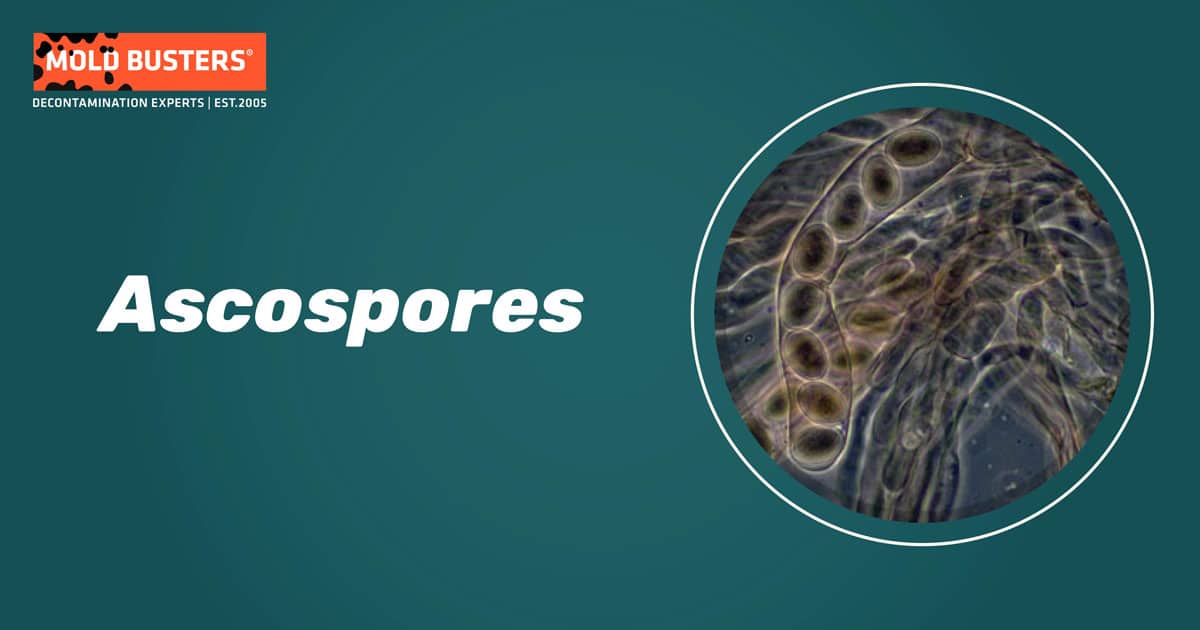
Ascospores are microscopic spores produced by fungal species belonging to the Ascomycota. With over 64 000 species in this division [1], it is apparent that the term Ascospores covers a wide range and variety of spores. However broad the term may be, a single airborne spore, upon reaching a suitable damp, humid environment, can easily develop into a multicellular fungal growth, more commonly known as a mold. Apart from being aesthetically displeasing, the mold will release more spores into the surrounding air, potentially leading to health issues for any inhabitants.
Knowledge is power when it comes to finding indoor type spores and removing them permanently. If you suspect you have found a potential mold growth, don’t wait to call a professional team of mold specialists or testers for a solution.
Want to know more? Let’s delve deeper into the subject, then.
What are Ascospores?
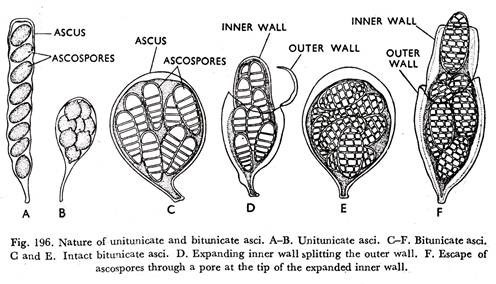
These sexual spores are formed in capsules known as asci. They can be found almost everywhere and can belong to one of more than 3000 genera that include Chaetomium, Aspergillus, Penicillium, Peziza, Ascotricha and many more.
Did you know that some Ascomycota are among those ubiquitous organisms that can destroy cellulosic fabrics [2]?
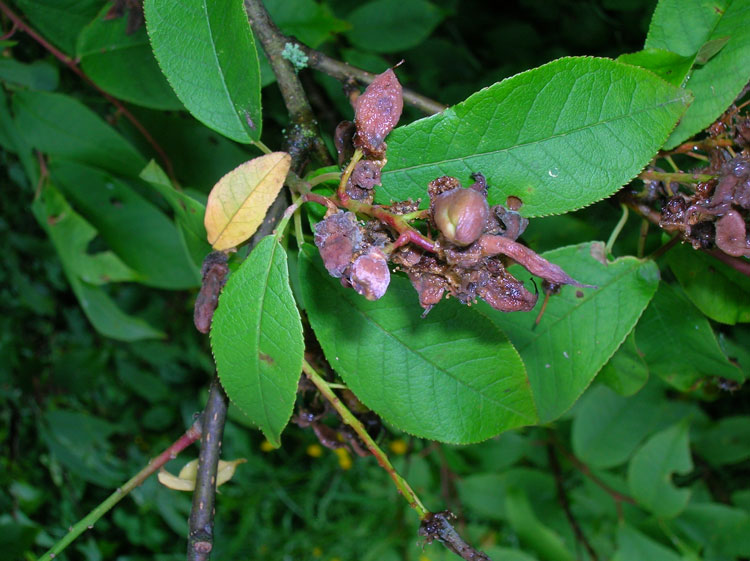
However, these molds mainly grow on ornamental trees, fruits, crop plants and timber, while others are associated with insects and even fish. Of special interest are the Cordyceps and Opiocordyceps genera, several species of which have evolved to target a specific host species, usually a species of ant or wasp. Once infected, the arthropod will exhibit behavioural changes, all to the benefit of the fungus [3]. Thanks to these apparent “mind controlling” properties, the Cordyceps genus has been popularized in science fiction. Thankfully, they live in remote tropical forests and have not evolved to parasite on humans (yet!).
Moving on, species of Ascomycota and therefore their spores can be categorized in terms of health significance as well. Those not representing any indoor air quality significance are the ones that are generally used for morphological identification.
Are Ascospores asexual?
No. In fact, the life cycle of most Ascomycota species can be divided into two distinct reproductive phases – sexual and asexual. While the former phase involves the formation of Ascospores, the topic of conversation, the latter involves asexual spores called conidiospores, which are produced on specialized stalks (conidiophores) [4].
How are Ascospores formed?
Depending on the species, a large variety of conditions can help form Ascospores in the sac-like structure of an ascus. The spores are formed after the fusion of male and female structures, the antheridium and the ascogonium. Ascogenous hyphae will grow out of the fertilized ascogonium, and after several meiotic and mitotic divisions, the spores mature [4]. In most cases, an ascus holds 8 spores. However, the number can vary from one to several thousand [5].
These microscopic spores of can be found developing on dead, decaying and infected plants during the winter. During the spring, warm rains trigger the release of spores into the air and that’s exactly how the infections develop as the number of Ascospores grows.
Moreover, these molds cause diseases like powdery mildews, ear rot of corn, blue stains, fruit rot of cereals and many more.
Did you ever ask yourself what makes those tiny round black spots on your spring apples? They are nothing but the infections built by these mold species. The darker the spot, the more severe the infection, no matter what part of the infection season it is.
What is Ascospores mold?
Ascospores are a phase in the life cycle of many fungi belonging to the Ascomycota division. With thousands of known species, these fungi are highly variable and can grow as budding single cells such as yeasts, or can grow into a macroscopic mycelium, more commonly known as a mold. These molds can come in many shapes, sizes and colors, with varying transparency/opaqueness.
In the house, you can generally find them everywhere, from bathroom tiles to the ceiling, on floors, walls and doors.
However, although the complete list of their habitats is practically endless, the following list suggests areas to keep an eye on:
- Windows
- Upholstered furniture
- Rugs and mattresses
- Walls and cabinets
- Airtight closets
In short, these molds can grow relatively well in damp, enclosed, wet or air sealed surfaces or materials.
What are Ascospores acceptable levels?
While there are currently no established guidelines on acceptable Ascospore levels, concentrations of over 5 000 spores/m3 should warrant further action [6].
Ascospores mold statistics
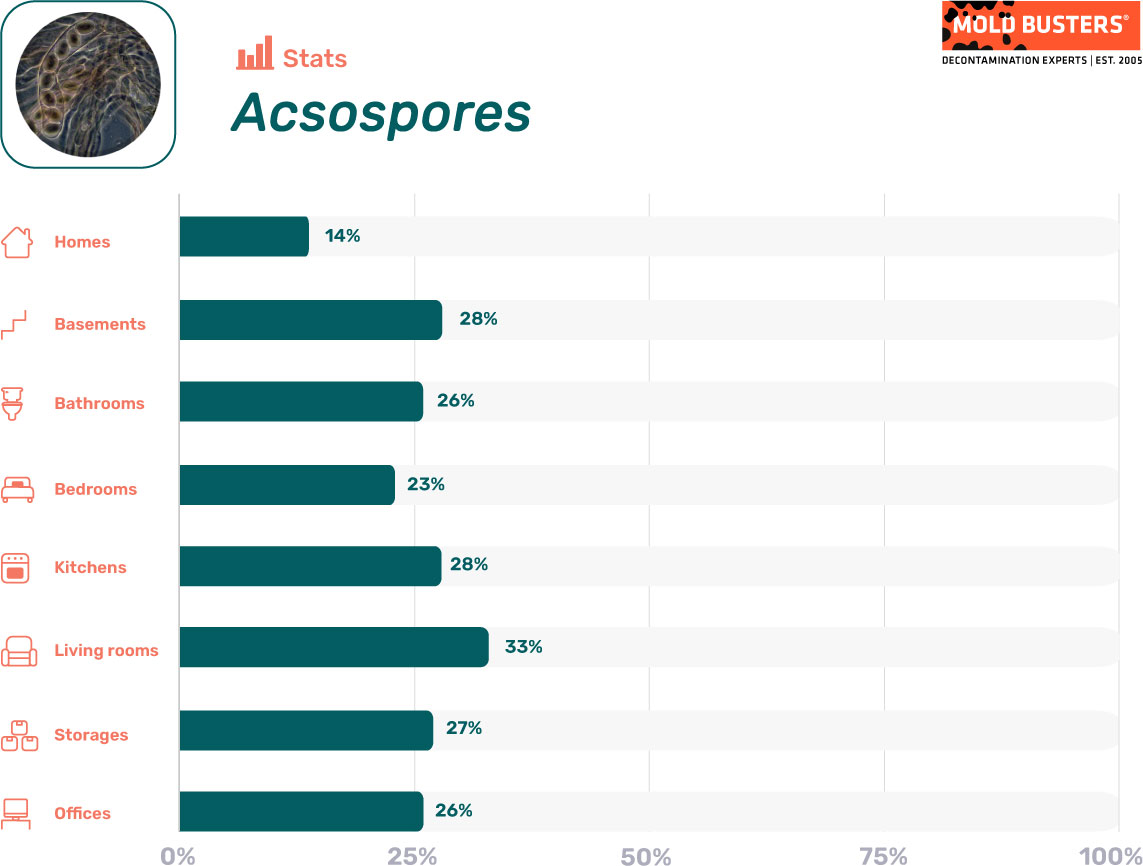
As part of the data analysis presented inside our mold statistics resource page, we have calculated how often mold spore types appear in different parts of the indoor environment when mold levels are elevated. Below are the stats for Ascospores:

What are Ascospores health effects?
With today’s smart living strategies insisting on more and more programmed intelligence, condensation needs and energy efficient technologies, every home is becoming more airtight and enclosed like never before. Perhaps this suits us, but it suits the development of mold just as well.
Rooms with poor ventilation and persistent damp are the ones where mould is most likely to establish. Ascospores are simply the spores of one large fungal group, and the group includes both harmless species and ones worth identifying, which is why a spore type on its own tells you less than where it is coming from.
What are ascospores allergy symptoms?
Ascospores are recognised as a source of airborne allergens, and reported reactions are mostly allergic and respiratory. Sensitivity varies considerably between individuals, and people who already have asthma, hay fever, or another chronic respiratory condition tend to react more readily than others.
Prolonged exposure to indoor mould can worsen allergy and asthma symptoms in people who are sensitive to it, though responses vary widely from person to person.
Let’s see below some of the major allergy symptoms developed by these molds:
- Headache
- Respiratory difficulties
- Nausea
- Fatigue and dizziness
- Asthma
- Ringworm
- Athlete’s foot, and more
Are Ascospores dangerous?
Some species within the Ascomycota are well documented as sources of indoor allergens, and reviews of fungal exposure and health list them among the fungal groups most often associated with allergic response [7].
It is worth keeping the scale straight here. Ascospores are not a single mould. The term covers the spores of many different species in the Ascomycota, tens of thousands of them, the large majority of which are outdoor fungi with no bearing on indoor air quality. A high ascospore count is a signal worth investigating, not a diagnosis in itself.
How to identify Ascospores in your home?
Identifying microscopic mold at home is no child’s game when you don’t have the eyes of a trained professional.
As some of these fungi are dark in color and some absolutely colorless, the job is extremely difficult.
In fact, depending on their genus and species, these spores are rarely identifiable at first sight and can sometimes only be identified by their associated fruiting structure or other characteristic morphological traits.
In any case, if you notice physical symptoms or unpleasant air smells, you should call a certified mold testing company to perform an inspection.
How to get rid of Ascospores mold?
Mold spores such as Ascospores are very common to both indoor and outdoor spaces. With many species reported as allergens and irritants, the most important job is to remove them permanently before they can cause critical damage to your family, pets and home.
Do look for enclosed areas and try to keep them as dry and ventilated as possible. Brush off mold deposits and keep humidity balanced. But most importantly, talk to a professional mold removal service that can offer you a remedial solution against indoor spores like no other.
Ascospores FAQ
What are ascospores?
Ascospores are the sexual spores of fungi in the Ascomycota, the largest division of the fungal kingdom with more than 64,000 described species. On a lab report the word is a broad category rather than a single species, covering everything from plant fungi and outdoor decomposers to indoor genera such as Chaetomium, Aspergillus, and Penicillium. They are among the most common spore types in outdoor air, which is why they appear on most indoor samples.
My air quality report shows ascospores. Is that bad?
Not on its own. Ascospores are normal in outdoor air and enter buildings through open windows, doors, and ventilation, so finding them indoors is expected. What matters is the comparison: an indoor count well above the outdoor sample taken the same day suggests an indoor source, while a count at or below outdoor levels usually reflects normal infiltration. A report without an outdoor comparison sample is difficult to interpret.
What is an acceptable level of ascospores indoors?
There is no regulatory limit for fungal spore counts in Canada, and no single number that means safe or unsafe. One widely used interpretation guide treats counts above roughly 5,000 spores per cubic metre as warranting a closer look, but that figure is a prompt to investigate rather than a threshold of harm. Interpretation depends on the indoor to outdoor ratio, the mix of spore types present, and the season, since outdoor counts rise sharply in spring and autumn.
Are ascospores dangerous?
Reported reactions are mostly allergic and respiratory, and sensitivity varies considerably from person to person. People with existing asthma or hay fever tend to react more readily. It is worth keeping the scale straight: ascospores are a category covering tens of thousands of species, most of them ordinary outdoor fungi, so a count on a report is not a finding of any particular harmful organism. If you are experiencing symptoms you think relate to mold exposure, speak with a physician.
What causes high ascospore counts indoors?
Usually one of two things. Either outdoor air is carrying high counts in, which is common after wet weather and during spring and autumn, or something is growing inside on a damp surface. Indoors, look at enclosed and poorly ventilated spaces: behind furniture on exterior walls, inside closets, under carpet, and in basements and crawl spaces. Identifying which of the two it is comes down to comparing the indoor sample against a matched outdoor one.
References
- Bennett RJ, Turgeon BG (2016). Fungal Sex: The Ascomycota. Microbiol Spectr. 4(5).
- Gupta R, Mukerji KG (2001). Microbial Technology. APH Publishing Corporation, New Delhi, pp. 30
- Evans HC, Elliot SL, Hughes DP (2011). Hidden Diversity Behind the Zombie-Ant Fungus Ophiocordyceps unilateralis: Four New Species Described from Carpenter Ants in Minas Gerais, Brazil. PLoS ONE. 6 (3): e17024
- Carlile MJ, Gooday GW, Watkinson SC (2001). The Fungi, Second Edition. Academic Press, London, pp 45-46
- Petersen JH (2013). The Kingdom of Fungi. Princeton University Press, Princeton, New Jersey, pp 46
- Air-O-Cell Method Interpretation Guide.
- Baxi SN, Portnoy JM, Larenas-Linnemann D, Phipatanakul W, Environmental Allergens Workgroup (2016). Exposure and Health Effects of Fungi on Humans. J Allergy Clin Immunol Pract. 4(3):396-404.
Get Special Gift: Industry-Standard Mold Removal Guidelines
Download the industry-standard guidelines that Mold Busters use in their own mold removal services, including news, tips and special offers:

Written by:
John Ward
Account Executive
Mold Busters
Fact checked by:
Michael Golubev
General Manager
Mold Busters