
Kunze 1817
What is Chaetomium?
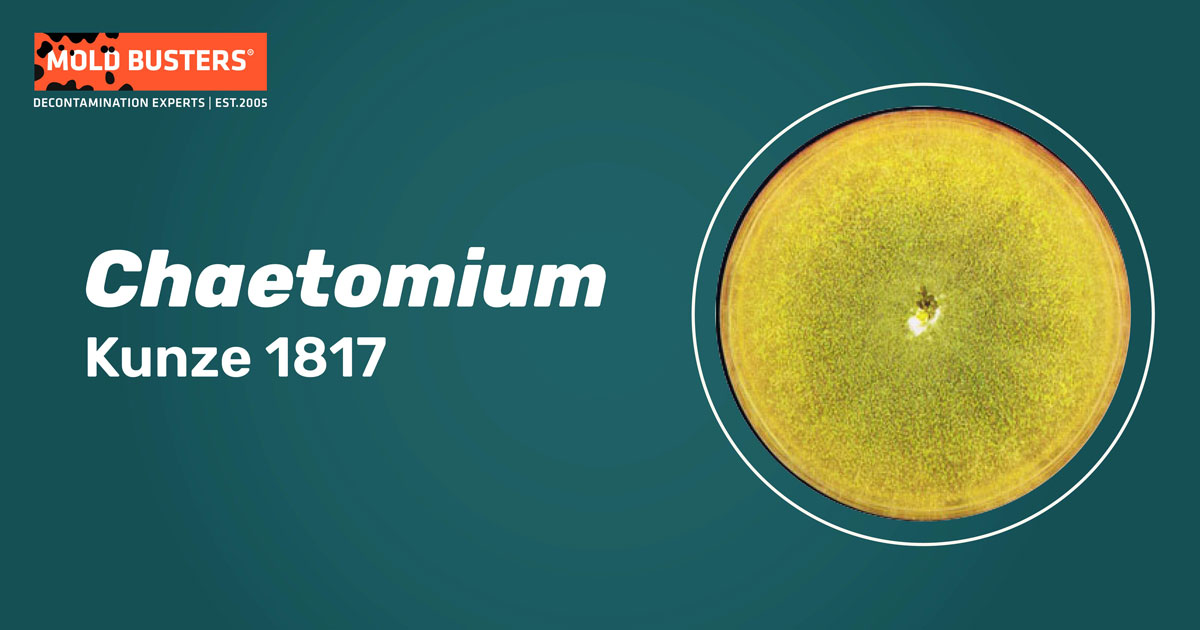
Chaetomium is a genus of mold fungi with the ability to colonize many different substrates. Outdoors, they can be commonly found in soil, compost, and plant debris. Chaetomium’s ability to degrade cellulose makes them frequent colonizers on various indoor-building materials, such as planks, wallpapers, and gypsum walls. They are known to produce a variety of bioactive and volatile metabolites, thereby producing strong dusty smells, especially in water-damaged building materials.
What are Chaetomium species?
There are approximately 90 recognized species strictly in the genus Chaetomium, while broadly speaking, around 400 fungi have been described in Chaetomium. Several of these species have been reported to be allergenic or pathogenic. The most commonly occurring species is C. globosum, followed by C. atrobrunneum, C. funicola, and C. strumarium [13].
Chaetomium morphology
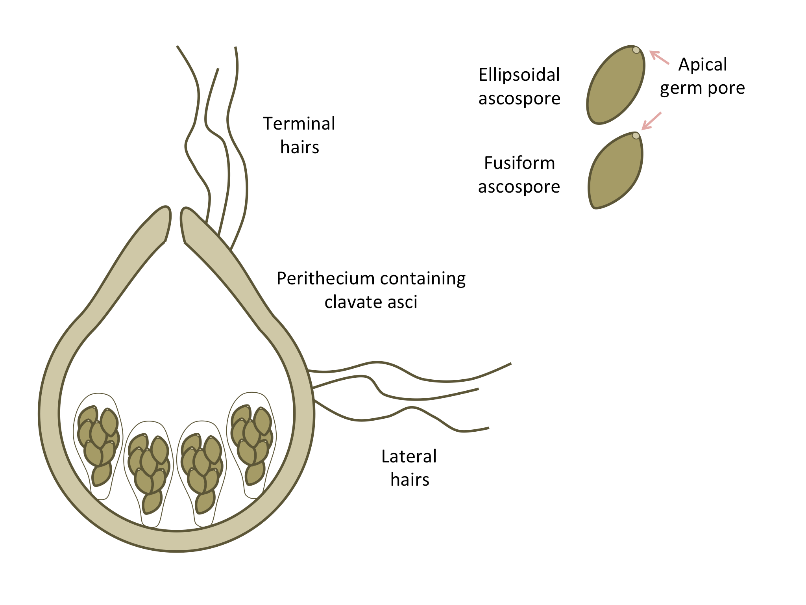
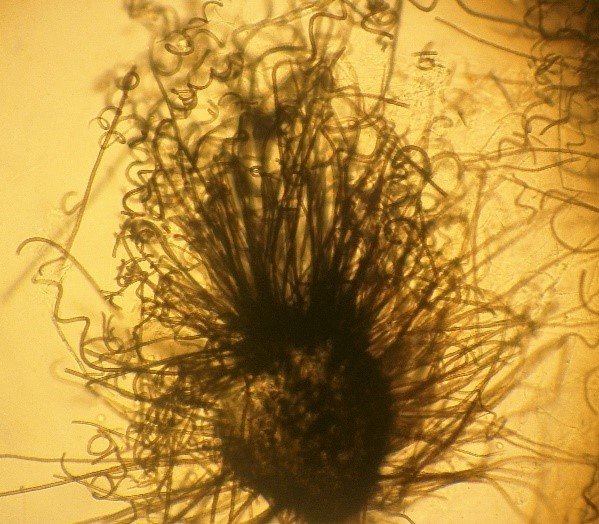
The fruiting bodies (ascocarps) that Chaetomium spp. produce are of perithecia type (flask-shaped hollow ascocarp), with an opening (ostiole) through which the ascospores are released (Fig. 1). Ascospores (sexual fungal spores) produced by the fungi from the Chaetomium genus are often freed from the ascus (a sack-like structure containing spores) before being discharged singly from the fruiting body, and hence could be mistaken for conidia (which are produced asexually). Chaetomium spp. produce characteristic dark hyphae attached to the fruiting body walls, which are clearly visible under the low power microscope (Fig. 2) [14].
How does Chaetomium mold appear?
Chaetomium is common mesophilic fungi with a worldwide distribution. Like most mold species, Chaetomium spp. reproduces through airborne spores. Once these spores land in a suitable environment, they quickly germinate and begin to develop into a colony. Indoor mold colonies are likely to appear in damp and humid areas or areas that have previously suffered water damage. They grow well on cellulose-containing materials, such as drywall, wallpaper, and wood.
The temperature they can grow at depends on the species but ranges from 15°C to 55°C (59–131°F). Most species develop optimally between 25°C and 35°C (77–95°F). They require a water activity above 0.90 [2]. These fungi can easily dissolve the cellulose fibers contained in materials such as paper and cotton, thus breaking apart the materials themselves. This process is even faster under high humidity conditions.
Chaetomium mold statistics
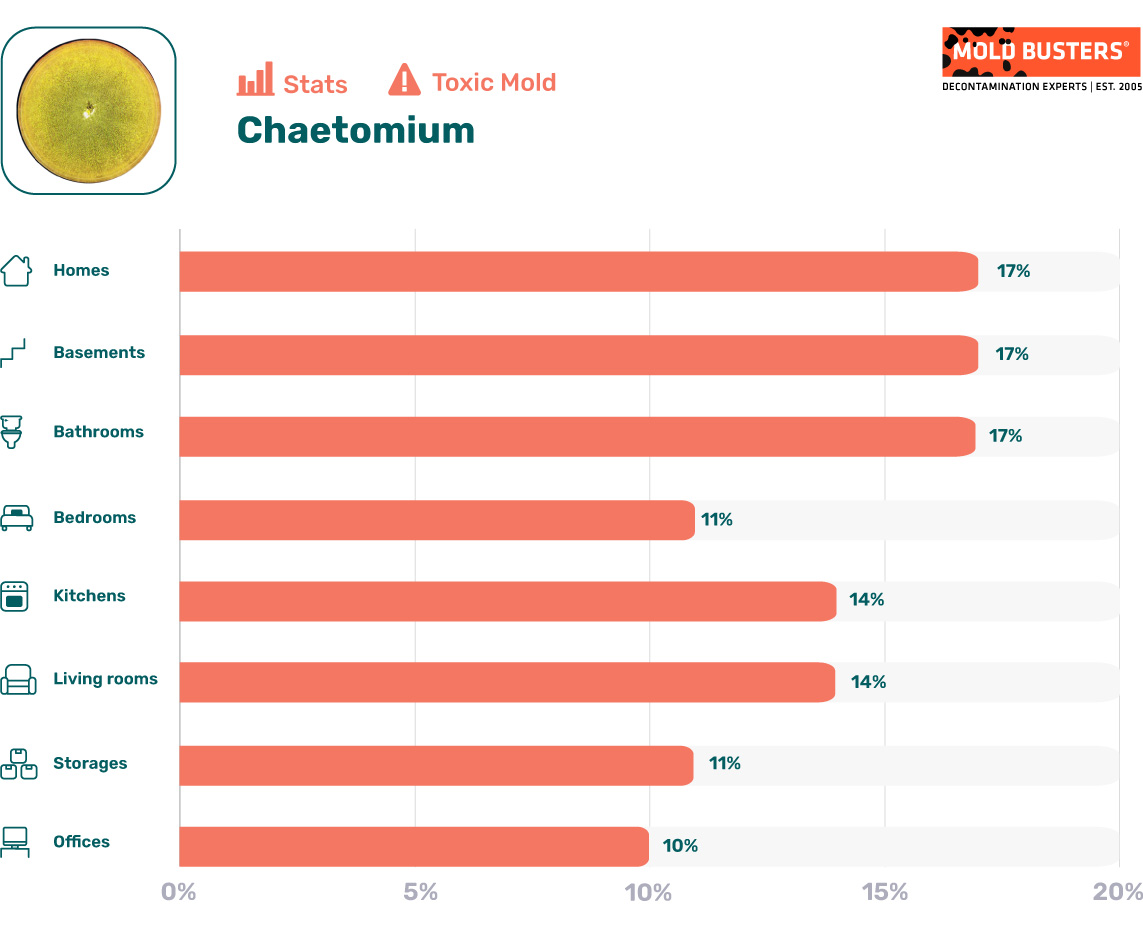
As part of the data analysis presented inside our Mold Statistics resource page, we have calculated how often mold spore types appear in different parts of the indoor environment when mold levels are elevated. Below are the stats for Chaetomium:

Is Chaetomium mold toxic?
Chaetomium molds produce several mycotoxins, including sterigmatocystin, O-methylsterigmatocystin, chaetochromin, chaetocin, chetomin, cochliodinols, and mollicellin G [3]. Many of these compounds have been reported to have teratogenic and carcinogenic effects. Chaetoglobsins A and C, secreted by C. globosum, are reported to be produced in building materials.
Research into Chaetomium mycotoxins in humans is limited. The available studies are animal studies, in which cereals contaminated with Chaetomium were harmful when fed to test animals, and Chaetomium extracts affected organ tissue in mice [5, 6, 7]. These findings describe laboratory conditions and controlled doses. They are not a measure of what exposure in a building means for a person.
What are Chaetomium mold health effects?
Many types of mold, including Chaetomium molds, can lead to adverse health effects if not dealt with on time. Problems usually occur due to an excessive concentration of fungal spores in the surrounding air.
Chaetomium is reported to be allergenic. Published studies associate exposure with hay fever, asthma, and allergic sinusitis [7]. As with other indoor moulds, reactions vary from person to person, and people with allergies, asthma, or weakened immune systems tend to be more sensitive.
Skin and nail infections involving Chaetomium species have been reported in medical literature [8]. More serious infections are documented but are rare, and the reported cases occurred in people who were already severely immunocompromised or were intravenous drug users [9]. They are not a typical outcome of finding this mould in a building.
If you are experiencing symptoms you think may be related to mould in your home, that is a conversation for a physician. What we can tell you is whether the mould is there, what species it is, and where the moisture feeding it is coming from.
What are Chaetomium mold symptoms?
Reported reactions to Chaetomium exposure are mostly allergic and respiratory: coughing, nasal congestion, sinus irritation, and cold or flu like symptoms. Nail infections have also been reported, and these are more visible, with nails thickening, discolouring, and becoming brittle [11, 12].
Symptoms alone cannot tell you which mould you have, or whether mould is the cause. Only testing can identify the species, and only a physician can assess symptoms.
Where can you find Chaetomium mold in the house?
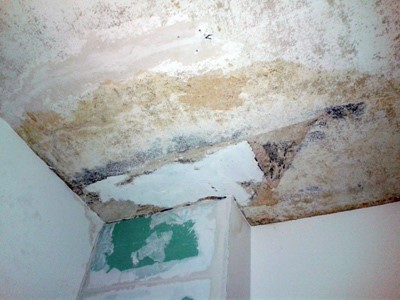
In houses, Chaetomium molds are mostly found in areas that have been damaged by water, such as leaking roofs, damp basements, leaky pipes, or areas around the sink (Fig. 3). They can also be found in the areas surrounding the households, such as gardens and composts.
How to remove Chaetomium mold?
Chaetomium molds can be hazardous to health and therefore need to be removed as soon as possible. The longer the mold remains in your house, the more likely it will spread to other locations, making cleanup more extensive and expensive. Furthermore, the longer exposure to the mold, the more likely adverse health issues related to Chaetomium might arise.
Chaetomium molds tend to grow in places that are difficult to see, such as inside walls, under carpets, and inside air conditioning ducts. To ensure that fungal colonies are located and removed from all areas, the best thing to do is to call a mold removal expert to inspect your home.
An experienced mold removal professional will locate all the areas in your home that contain mold and correctly advise you on what needs to be done next. Additionally, our experts can answer any other questions you may have about mold and also give you an estimate of how much it will cost to have the mold in your home professionally removed.
Chaetomium FAQ
What does Chaetomium mold look like?
Chaetomium starts out white and cottony, then darkens to grey, olive, or near black as it matures. Under magnification the colonies carry distinctive football shaped fruiting bodies covered in curled hairs. On drywall it often appears as a dark patch with a slightly fuzzy texture.
Where does Chaetomium grow in a house?
Almost always in places that have been wet: behind leaking roofs, in damp basements, around leaking pipes, and on water damaged drywall, wallpaper, and wood. Chaetomium digests cellulose, so it targets paper faced building materials in particular.
Does Chaetomium mean I have a water leak?
Usually, yes. Chaetomium needs sustained moisture to establish, so finding it indoors is a strong indication of an ongoing or recent water problem rather than everyday humidity. Removing the growth without finding the water source generally means it returns.
Is Chaetomium dangerous?
Chaetomium is reported to be allergenic, and exposure has been associated with hay fever, asthma, and sinus irritation. Reactions vary from person to person. Serious infections are documented but rare and occur mainly in people who are already severely immunocompromised. If you are experiencing symptoms you think relate to mold exposure, speak with a physician.
How is Chaetomium removed?
The moisture source is corrected first, otherwise the mold returns. Porous materials that are colonized, typically drywall and insulation, are usually removed rather than cleaned, because Chaetomium roots into cellulose. The work area is contained and HEPA filtered so spores are not spread through the rest of the building during removal.
References
- Hawksworth DL, Lücking R (2017). Fungal Diversity Revisited: 2.2 to 3.8 Million Species. Microbiol Spectr. 5(4).
- d’Halewyn MA, Chevalier P (2019). Chaetomium spp. Retrieved from here.
- Sekita S, Yoshihira K, Natori S, Udagawa S, Muroi T, Sugiyama Y, Kurata H, Umeda M. (1981) Mycotoxin production by Chaetomium spp. and related fungi. Can J Microbiol. 27(8):766-72.
- Manning RO, Wyatt RD (1984). Comparative toxicity of Chaetomium contaminated corn and various chemical forms of oosporein in broiler chicks. Poult Sci. 63(2): 251-259.
- Christensen CM, Nelson GH, Mirocha CJ, Bates F, Dorworth CE (1966). Toxicity to rats of corn invaded by Chaetomium globosum. Appl Microbiol. 14(5): 774-777.
- Gupta J, Pathak B, Sethi N, Vora VC (1981). Histopathology of Mycotoxicosis produced in Swiss albino mice by metabolites of some fungal isolates. Appl Environ Microbiol. 41(3): 752-757.
- Burge HA (1985). Fungus allergens. Clin Rev Allergy. 3(3): 319-329.
- Stiller MJ, Rosenthal S, Summerbell RC, Pollack J, Chan A (1992). Onychomycosis of the toenails caused by Chaetomium globosum. J Am Acad Dermatol. 26(5/1): 775-776.
- Howard DH (2003). Pathogenic Fungi in Humans and Animals. Marcel Dekker, New York. pp 652-654.
- Lillard S (2004). Chaetomium. Retrieved from mold-help.org.
Get Special Gift: Industry-Standard Mold Removal Guidelines
Download the industry-standard guidelines that Mold Busters use in their own mold removal services, including news, tips and special offers:

Written by:
John Ward
Account Executive
Mold Busters
Edited by:
Dusan Sadikovic
Mycologist – MSc, PhD
Mold Busters