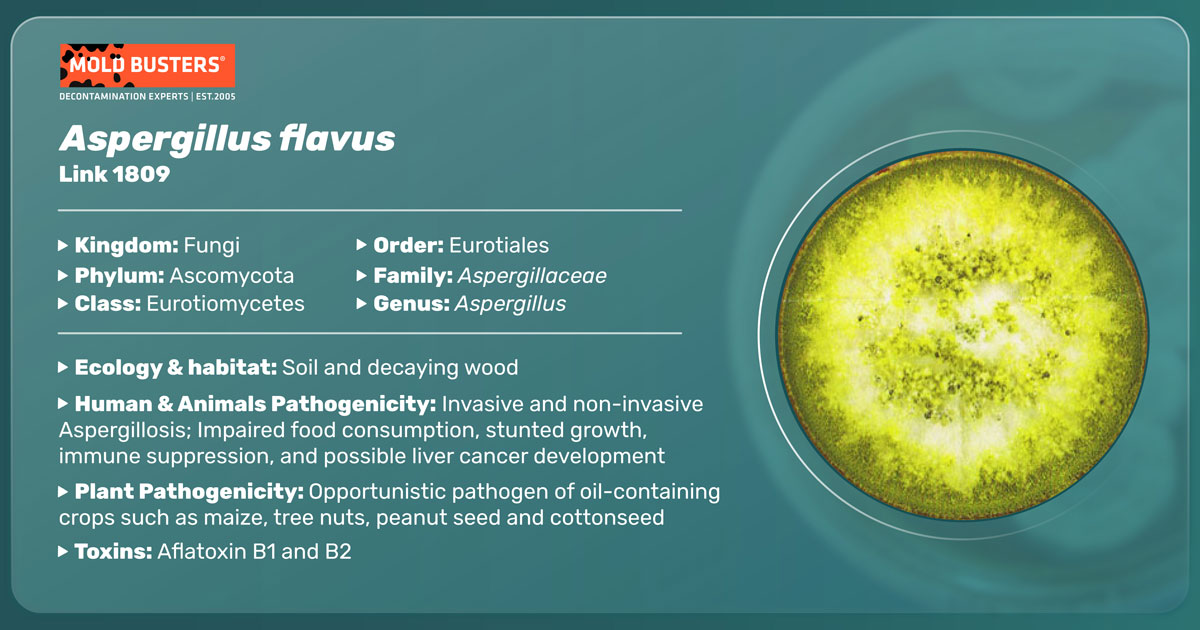
Link 1809
What is Aspergillus flavus mold?
Aspergillus flavus is a saprophytic and plant-pathogenic mold fungus with a worldwide distribution. A. flavus is also a plant pathogen, well known for being able or preharvest, postharvest, and storage infections.
A. flavus crop infections can lead to yield losses that have been reported to be worth millions of dollars. This species can deal significant damages to crops such as grains, tree nuts, and legumes. A. flavus releases several mycotoxins, which can have serious adverse health effects [2].
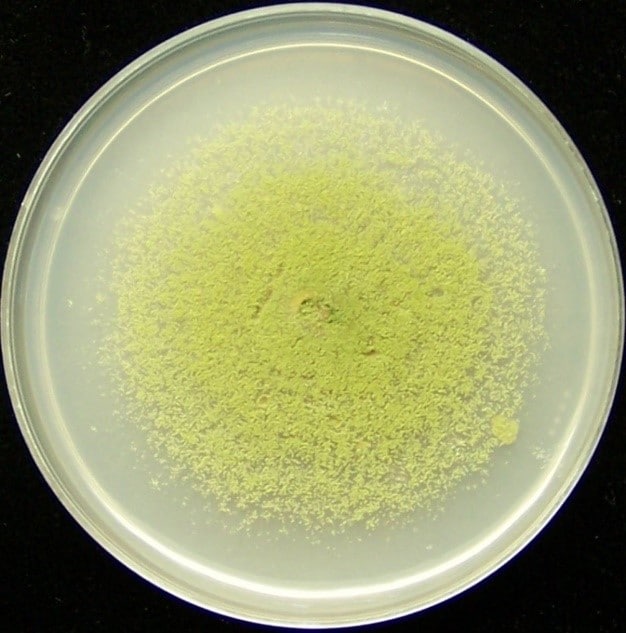
Aspergillus flavus morphology
Aspergillus flavus colonies are usually up to 70 µm in diameter, velvety at margins, and tufted in the center. The color of the cultures ranges from whitish, gray, yellow-green or olive-yellow, and sometimes pure yellow.
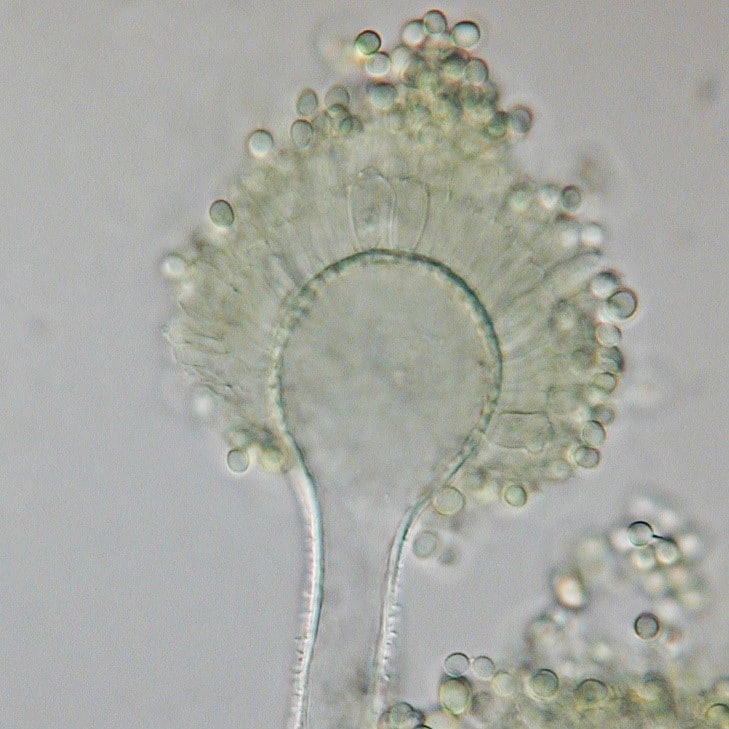
Some isolates produce sclerotia, which are structures that help the organism survive harsher conditions, such as overwintering. They are initially white but become reddish-brown to black when hardened and mature. Sclerotia are spherical, usually between 400–800 µm in diameter. Conidia (asexual spores) are formed on metulae and phialides. They are spherical to subspheroidal, 3.5–5.0 µm in diameter, often yellowish, with thin-walled, and mostly roughened, rarely smooth [7].

Aspergillus flavus toxicity
Aspergillus flavus is one of the major sources of aflatoxins, which are among the most concerning toxins in food production. Four naturally produced major aflatoxins are B1, B2, G1, and G2. “B” and “G” aflatoxins get their name by the blue and green fluorescent colors which are produced by the toxins under UV light. The numbers 1 and 2 represent certain major and minor compounds contained by the toxins. Aflatoxins are toxic to all mammals, including humans. The poisoning usually occurs through ingestion of infected grain, or through the consumption of dairy and meat products, contaminated through animal feed infected by Aspergillus sp. Ingested, aflatoxins can cause cancer (carcinogenic), alter DNA (mutagenic), disturb embryo development (teratogenic), damage our liver and kidneys (hepatotoxic and nephrotoxic), and repress our immune system (immunosuppressive) [7].
Aside from aflatoxins, A. flavus produces cyclopiazonic acid, which can contribute to the degeneration and necrosis of various organs, but has low oral toxicity [3]. Aflatoxin contamination is a major problem in developing countries. Contaminated maize has been responsible for the death of hundreds of people in Kenya in recent years, and its use in dog foods has killed over 100 dogs in the United States in 1998 and 2005-2006 [4].
Why does Aspergillus flavus produce aflatoxin?
As secondary metabolites, mycotoxins are not necessary for the growth of fungi. A possible theory is that fungi use mycotoxins to weaken their hosts and thus provide an environment with less resistance to their development. A. flavus will produce aflatoxin if the temperature is above 15°C (59°F) and the water activity above 0.90 [7]. Aflatoxin contamination can occur pre- or post-harvest and affects many commodities, including peanuts, corn, wheat, millet, rice, sesame seeds, sunflower seeds, cotton seeds, and tree nuts.
Aflatoxins were originally discovered during the 1960s, when aflatoxin contamination caused the Turkey X outbreak which decimated this poultry species in the United Kingdom. This occurred as a peanut supply, used for poultry feed, was contaminated with A. flavus. This resulted in the death of over 100.000 turkeys and the subsequent discovery of aflatoxins [9].
Ecology of Aspergillus flavus?
Aspergillus flavus is tolerant to a wide range of temperatures and pH substrate values. Optimal growth is achieved at 33°C (91°F) but can withstand temperatures ranging between 10–48°C (50–118°F). Like most molds, it requires moisture to grow. Optimal water activity (aw) of the substrate will depend on temperature, with minimal values at aw=0.78. Similarly, it shows a wide tolerance for pH values, ranging from 2.1–11.2, with optimal growth achieved at 7.5 [5].
Where does Aspergillus flavus mold appear in the house?
Although this pathogenic mold is usually found outdoors on dead plants and animals, it is often found indoors. The most common place to find A. flavus is on carpets, as the carpet texture is excellent at catching and holding mold spores. Colonies of A. flavus will exploit any excess moisture found in an average household. Thus, high humidity spaces such as basements, kitchens, cellars, and bathrooms are areas where you may expect to find mold colonies.
The Environmental Relative Moldiness Index (ERMI) is an indoor air quality testing method developed by the U.S. Environmental Protection Agency and the U.S. Department of Housing and Urban Development. A. flavus is one of the ten Aspergillus species tested for. ERMI was designed as a reliable standardized method to evaluate air quality and mold contamination of households. It uses DNA-based technology to assess which adverse mold species, connected with water damage, and assigns a value to their quantity. Apart from being toxic due to ingestion, prolonged exposure to these mold spores can have various adverse health problems, ranging only from respiratory irritations and allergens to more serious conditions such as invasive aspergillosis, pneumonia, and asthma.
Aspergillus flavus mold statistics
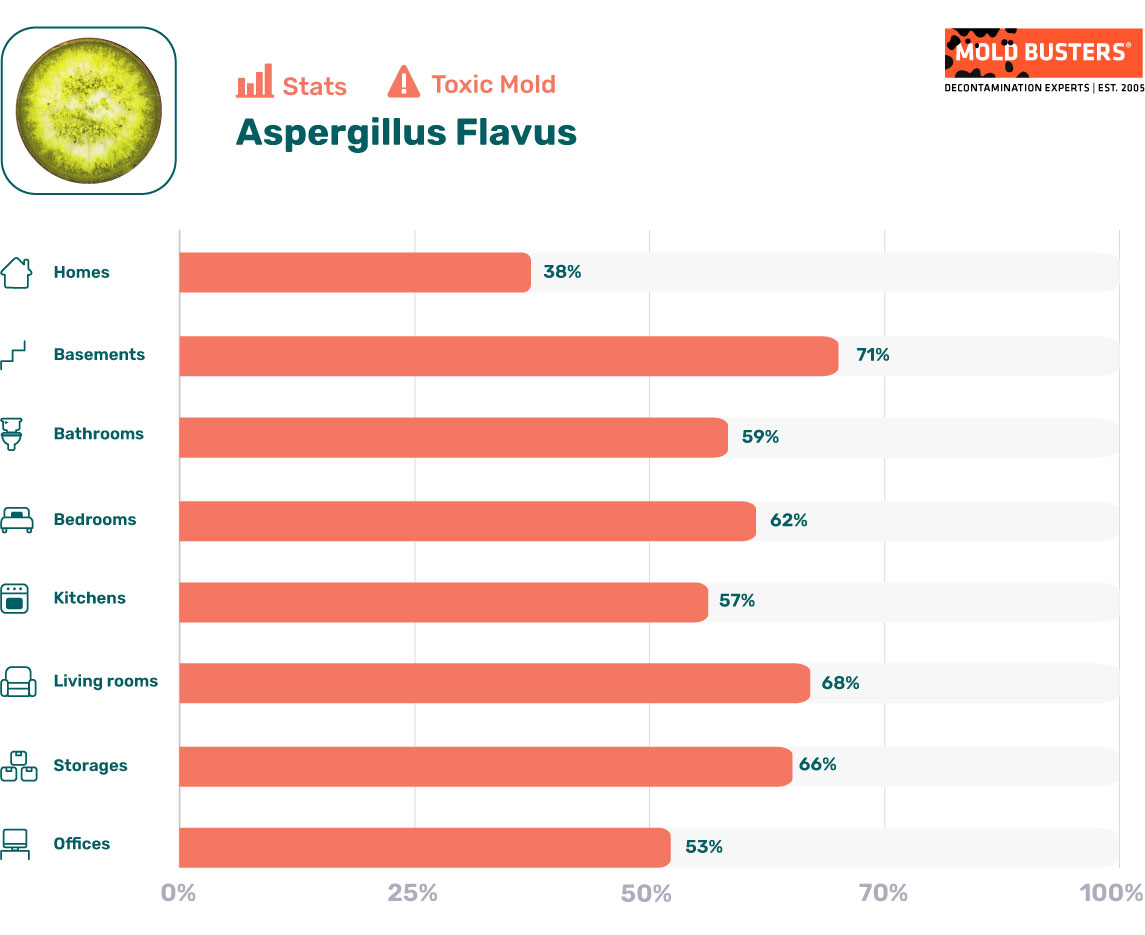
As part of the data analysis presented inside our mold statistics resource page, we have calculated how often mold spore types appear in different parts of the indoor environment when mold levels are elevated. Below are the stats for Aspergillus flavus:

Symptoms and health effects of Aspergillus flavus
In most people the immune system clears inhaled A. flavus spores without incident, which is why this very common mould is breathed in daily worldwide with no effect. The infections reported in medical literature occur in people with significantly weakened immune defences or existing lung conditions.
The collective name for these Aspergillus spp. infections is aspergillosis. Depending on the individual case, symptoms can include:
- Fever and chills
- Coughing up blood
- Wheezing or shortness of breath
- Chest or joint pain
- Headaches
- Eye symptoms
Joint involvement is documented in the medical literature as a rare presentation of aspergillosis, in a small number of reported cases [6]. As with the other conditions described here, it is associated with people who are already significantly immunocompromised.
Aflatoxicosis is the term for poisoning caused by ingesting aflatoxins, and it is a food safety issue rather than a building one. It is associated with eating heavily contaminated staple crops, which is why aflatoxin limits in food are regulated in Canada and internationally. Breathing spores from a mould patch in a house is a different exposure route entirely and is not how aflatoxicosis occurs.
What disease and infection does Aspergillus flavus cause?
Aspergillosis is the collective name for infections associated with Aspergillus species. It is a recognised medical condition, and it is overwhelmingly an illness of people whose immune defences are already severely compromised.
For someone with a healthy immune system, the realistic effect of long term exposure to these spores is allergic and respiratory: irritation, congestion, and asthma type responses, varying considerably from person to person. If you are experiencing symptoms you think may be related to mould in your home, that is a conversation for a physician. What we can tell you is whether the mould is there, which species it is, and where the moisture feeding it is coming from.
How to prevent and remove Aspergillus flavus?
Mold Busters provides professional mold remediation services, and our certified technicians remove Aspergillus flavus and other species from homes and commercial properties. Removal is only half the job. The moisture source has to be corrected as well, otherwise the same growth returns in the same place, which is why every remediation starts by finding out where the water is coming from.
We offer affordable services that will effectively eliminate Aspergillus flavus from your home, including air duct cleaning, odor removal, dehumidification and moisture control, testing for and removing mold, mold-proofing basements, infrared inspections, and antimicrobial treatments. Our objective is to ensure the quality of life through quality of service. Call us today to book your appointment.
Aspergillus flavus FAQ
Is Aspergillus flavus dangerous?
For a healthy person in a household setting, the realistic effect of exposure is allergic and respiratory: irritation, congestion, and asthma type responses that vary from person to person. The serious infections described in medical literature occur almost entirely in people who are already significantly immunocompromised. The mold does produce aflatoxins, but that is primarily a food safety concern tied to eating contaminated crops rather than to breathing spores indoors. If you are experiencing symptoms you think relate to mold exposure, speak with a physician.
What does Aspergillus flavus look like?
Colonies are yellow green to olive yellow, sometimes pure yellow, with a velvety texture and a tufted centre. They can reach a few centimetres across on a suitable surface. The yellow green colour is the most useful identifying feature, since it separates it from the black colonies of Aspergillus niger and the darker growth of other common indoor species.
Where does Aspergillus flavus grow in a house?
Carpets are the most common place, because carpet fibres trap and hold spores. Beyond that, anywhere with excess moisture: basements, kitchens, cellars, and bathrooms. It is also frequently found on stored food, particularly grains, tree nuts, peanuts, and corn, which is where most of the research attention on this species has been focused.
What are aflatoxins and should I worry about them at home?
Aflatoxins are compounds produced by A. flavus and a few related species, and they are among the most closely regulated contaminants in the global food supply. The exposure route that matters is ingestion of heavily contaminated staple crops, which is why food aflatoxin limits exist in Canada and internationally. Finding this mold growing on a damp surface in a house is not the same exposure, and the sensible response is to remove the growth and fix the moisture rather than to worry about aflatoxin poisoning.
How do you get rid of Aspergillus flavus?
The moisture source is corrected first, otherwise the growth returns. Colonized porous materials, typically carpet, drywall, and insulation, are usually removed rather than cleaned, since spores work deep into fibres. Hard non-porous surfaces can often be cleaned once the source is fixed. The work area is contained and HEPA filtered so spores are not spread through the rest of the building during removal. Any visibly moldy stored food should be discarded rather than salvaged.
References
- Jariwal R, Heidari A, Sandhu A, Patel J, Shoaepour K, Natarajan P, Cobos E (2018). Granulomatous Invasive Aspergillus flavus Infection Involving the Nasal Sinuses and Brain. J Investig Med High Impact Case Rep. 6:2324709618770473.
- Rubens J, Cardwell KF. 2005. The cost of mycotoxin management in the United States. See Ref. 1, pp 1-13
- Hocking AD (2001). Toxigenic Aspergillus species. In Food Microbiology – Fundamentals and Frontiers, 2nd edition, American Society for Microbiology, Washington DC, pp. 451–465.
Amaike S, Keller NP (2011). Aspergillus flavus. Annu Rev Phytopathol 49:107-33. - Pitt JI, Hocking AD (2009). Aspergillus and Related Teleomorphs. In: Fungi and Food Spoilage. Springer, Boston, MA, pp 467-468
- Gamaletsou MN, Rammaert B, Bueno MA, Sipsas NV, Moriyama B, Kontoyiannis DP, Roilides E, Zeller V, Taj-Aldeen SJ, Henry M, Petraitis V, Denning DW, Lortholary O, Walsh TJ; International Osteoarticular Mycoses Consortium (2017). Aspergillus arthritis: analysis of clinical manifestations, diagnosis, and treatment of 31 reported cases. Med Mycol 55(3):246-254.
- Peromingo B, Rodríguez A, Bernáldez V, Delgado J, Rodríguez M (2016). Effect of temperature and water activity on growth and aflatoxin production by Aspergillus flavus and Aspergillus parasiticus on cured meat model systems. Meat Sci 122:76-83.
- Pitt, J. I., & Hocking, A. D. (2009). The ecology of fungal food spoilage. In Fungi and food spoilage (pp. 3-9). Springer, Boston, MA.
- Amare, M. G., & Keller, N. P. (2014). Molecular mechanisms of Aspergillus flavus secondary metabolism and development. Fungal Genetics and Biology, 66, 11-18.
Get Special Gift: Industry-Standard Mold Removal Guidelines
Download the industry-standard guidelines that Mold Busters use in their own mold removal services, including news, tips and special offers:

Written by:
John Ward
Account Executive
Mold Busters
Edited by:
Dusan Sadikovic
Mycologist – MSc, PhD
Mold Busters